
Non-Iron Shirt Manufacturing Explained: Fabrics, Finishing and Quality Control
Non-iron shirts have become a core product for corporate wear, business apparel, and travel-focused collections. As a result, brands searching for a non-iron shirt manufacturer are no longer just asking if wrinkle-free shirts can be produced—but how consistently they can be manufactured at scale.
This guide explains the non-iron shirt manufacturing process from a factory perspective, focusing on fabric selection, finishing methods, and quality control, so buyers can evaluate production partners with confidence.
What does “non-iron” really mean in shirt manufacturing?
In manufacturing terms, “non-iron” does not mean a shirt will never wrinkle. It means the fabric and finishing process are engineered to:
recover quickly after wear
maintain a smooth appearance with minimal ironing
perform consistently after repeated washing
A professional men’s shirt factory achieves this through a combination of fabric chemistry, controlled finishing, and strict QC—not through shortcuts.
Fabrics used in non-iron shirt production
The foundation of any non-iron shirt is the fabric. Not all cotton fabrics are suitable.
Common fabric characteristics for non-iron shirts include:
high-quality long-staple cotton
tight and uniform weave (often poplin or twill)
controlled yarn twist
compatibility with resin-based finishes
Some mills offer pre-finished non-iron fabrics, while others require finishing to be applied during garment production. An experienced non-iron shirt manufacturer understands the trade-offs between both approaches.
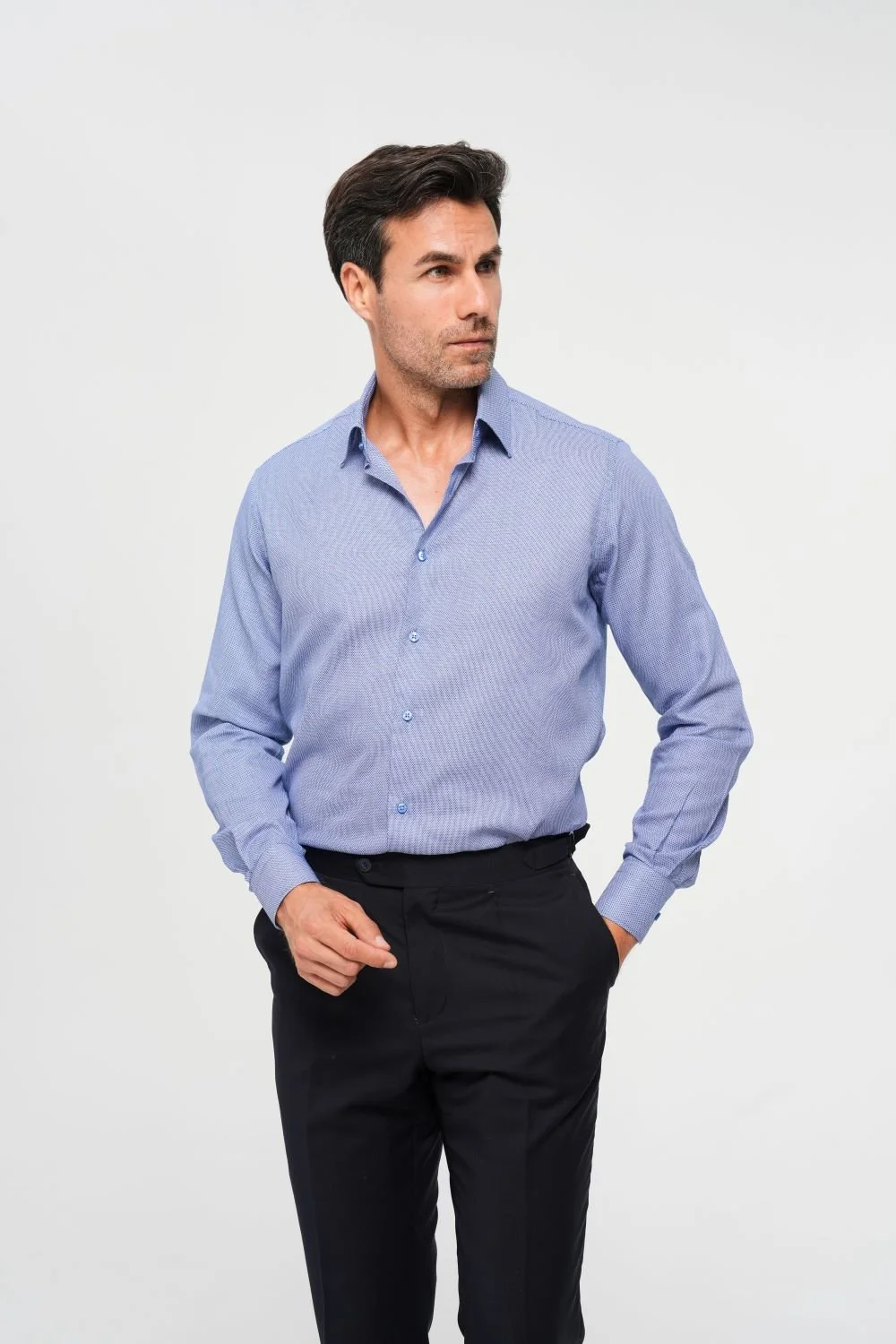
The role of finishing in non-iron shirts
Finishing is what transforms a standard cotton shirt into a non-iron product.
Typical non-iron finishing includes:
resin treatment to stabilize fiber structure
curing under controlled temperature and pressure
balanced application to avoid stiffness or yellowing
Poor finishing leads to common problems such as:
loss of softness
fabric discoloration
reduced breathability
uneven wrinkle recovery
This is why non-iron production should only be handled by a shirt factory with proven finishing control, not general apparel suppliers.
CMT considerations in non-iron shirt manufacturing
In CMT (Cut–Make–Trim) production, buyers often supply fabrics while the factory manages cutting, sewing, and finishing coordination.
For non-iron shirts under CMT:
fabric compatibility must be verified before cutting
shrinkage and finish behavior must be tested
sewing tension must be adjusted to avoid seam distortion
finishing must align with fabric supplier specifications
A reliable CMT non-iron shirt manufacturer will not proceed to bulk production without validating these parameters.
Why quality control is critical for non-iron shirts
Non-iron shirts are more sensitive to production errors than standard shirts. Quality control must be applied at multiple stages.
Key QC checkpoints include:
fabric inspection before cutting
shrinkage and color stability tests
in-line checks during sewing
post-finishing appearance and hand-feel evaluation
wash testing to confirm wrinkle recovery
Without proper QC, non-iron shirts may look acceptable at delivery but fail after a few washes—damaging brand reputation.
Measurement stability and non-iron production
Finishing processes can affect garment dimensions. Heat, pressure, and resin application may slightly alter measurements if not controlled.
Professional men’s shirt manufacturers manage this by:
adjusting measurement charts before finishing
defining realistic tolerances
checking dimensions after curing
aligning PPS samples with bulk production
Measurement discipline is essential to maintain fit consistency across orders and reorders.
Common mistakes brands make with non-iron shirts
Brands new to non-iron production often face issues such as:
choosing fabrics incompatible with finishing
prioritizing cost over finishing quality
skipping wash tests
underestimating QC requirements
working with factories lacking non-iron experience
These mistakes usually lead to higher returns and unstable reorders.
How to evaluate a non-iron shirt manufacturer
Before selecting a production partner, buyers should confirm:
experience with non-iron or easy-care shirts
clear explanation of finishing methods
documented quality control procedures
wash-test results
reorder consistency
Factories that can explain their process transparently are far more likely to deliver reliable results.
Conclusion: Non-iron shirts require manufacturing discipline
Non-iron shirt production is not a trend—it is a technical manufacturing discipline.
Brands that work with an experienced non-iron shirt manufacturer benefit from:
consistent appearance after washing
stable sizing and fit
reduced customer complaints
long-term reorder reliability
For bulk or private label programs, non-iron capability is a clear indicator of a factory’s technical strength.
B2B Production Support
If you are looking for a non-iron shirt manufacturer or a CMT men’s shirt factory for bulk or private label production, we can evaluate your fabric, finishing expectations, and QC requirements before sampling.
📩 Email: info@mdhazirgiyim.com
📲 WhatsApp: via our Contact page
