
100% Linen Shirts vs Linen Blends: What Buyers Should Know Before Production
Choosing the right fabric is one of the most critical decisions in men’s shirt manufacturing. For summer collections especially, buyers often face the same question:
Should we produce 100% linen shirts, or choose linen blend fabrics such as cotton/linen?
For brands, wholesalers, and retailers searching for a men’s shirt manufacturer or linen shirt factory, this decision affects not only product aesthetics but also cost, durability, lead time, customer satisfaction, and reorder stability.
This guide explains the real differences between 100% linen shirts and linen blend shirts, from a manufacturer’s perspective, so buyers can make informed production decisions before placing orders.
Why the Linen vs Linen Blend Decision Matters in Manufacturing
From the outside, two linen shirts may look similar. In production, however, pure linen and linen blends behave very differently.
The fabric choice directly impacts:
production difficulty
price positioning
shrinkage and quality control
ironing performance
consumer expectations
long-term reorder consistency
That’s why experienced private label shirt manufacturers always discuss fabric structure before sampling begins.
What Is 100% Linen Fabric?
100% linen is made entirely from flax fibers. It is valued for its natural texture, breathability, and premium summer appearance.
Key characteristics of 100% linen shirts
very breathable and cool
natural slub texture
relaxed, premium look
wrinkles easily (part of its character)
strong natural fiber but sensitive during sewing
When buyers choose 100% linen shirts
Buyers typically choose pure linen when:
targeting premium summer or resort collections
selling to customers who appreciate natural fabrics
positioning the product as a lifestyle or vacation shirt
accepting natural wrinkling as a design feature
For many European brands, 100% linen shirts represent authenticity and seasonal exclusivity.
Manufacturing Considerations for 100% Linen Shirts
From a factory perspective, linen is one of the most demanding fabrics to work with.
A professional linen shirt manufacturer must control:
fabric shrinkage before cutting
distortion during cutting and sewing
seam reinforcement
pressing techniques that respect linen texture
tolerance management to avoid measurement shifts
Without proper handling, 100% linen shirts can suffer from:
twisted seams
inconsistent sizing
excessive shrinkage after washing
poor appearance after pressing
This is why buyers should work only with a shirt factory experienced in linen production, not general apparel suppliers.
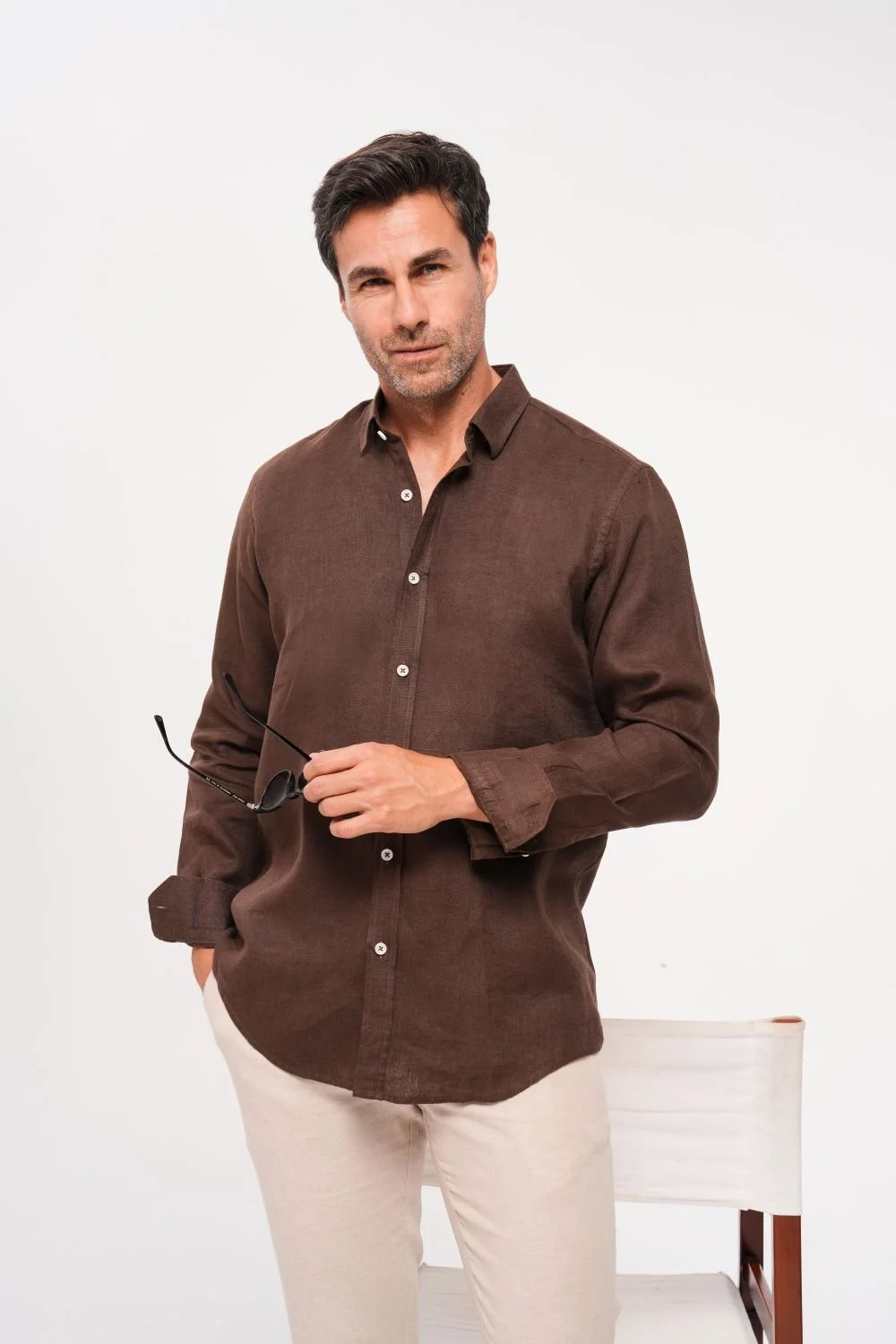
What Are Linen Blend Fabrics (Cotton/Linen)?
Linen blends—most commonly cotton/linen—combine linen fibers with cotton to improve performance while keeping a linen-like appearance.
Common blend ratios
55% linen / 45% cotton
60% linen / 40% cotton
70% linen / 30% cotton
Each ratio slightly changes fabric behavior, cost, and appearance.
Advantages of Linen Blend Shirts in Production
From a manufacturing and commercial standpoint, linen blends offer several advantages.
Improved stability during production
Cotton stabilizes linen, resulting in:
easier cutting and sewing
better size consistency
reduced distortion
Better wrinkle performance
Linen blend shirts:
wrinkle less than 100% linen
look cleaner throughout the day
require less aggressive ironing
More predictable quality control
For private label shirt production, linen blends allow:
tighter measurement tolerances
lower rejection rates
smoother bulk production
Cost efficiency
Blends often reduce fabric cost and production risk, making them attractive for:
mid-range retail
wholesale programs
repeat seasonal collections
When Buyers Should Choose Linen Blends Instead of 100% Linen
Linen blends are often the better option when:
targeting broader commercial markets
selling through wholesale channels
prioritizing durability and ease of care
planning high-volume production
expecting frequent reorders
Many buyers searching for a men’s shirt factory ultimately choose linen blends for core summer programs, while reserving 100% linen for limited or premium capsules.
Appearance & Customer Perception: What Really Sells?
From the end-customer perspective:
100% linen feels more natural, relaxed, and “authentic”
linen blends feel cleaner, more structured, and easier to wear
Neither option is “better” universally. The right choice depends on:
brand positioning
price point
customer lifestyle
retail environment
A professional men’s shirt manufacturer should help align fabric choice with your market—not push one option blindly.
Pricing Differences: 100% Linen vs Linen Blends
In shirt manufacturing, pricing is influenced by:
fabric cost
production difficulty
waste and rejection rates
finishing requirements
Generally:
100% linen shirts have higher production risk and labor sensitivity
linen blend shirts offer more predictable costing
This difference becomes especially important for fason (contract) shirt manufacturing and wholesale buyers managing margins closely.
Reorders and Long-Term Production Stability
For brands planning seasonal continuity, reorder stability is critical.
100% linen reorders
require strict fabric batch control
demand careful shrinkage testing each season
may vary more between production runs
Linen blend reorders
offer more consistency across seasons
simplify fit and measurement repetition
reduce production variability
This is why many private label shirt manufacturers recommend linen blends for long-term programs.
What Buyers Should Ask a Shirt Manufacturer Before Production
Before confirming fabric choice, buyers should ask:
Has this fabric been tested for shrinkage?
How does it behave during cutting and sewing?
What are the tolerance limits in bulk production?
How does the fabric perform after washing?
Is it suitable for reorders?
These questions help separate experienced shirt factories from general suppliers.
Conclusion: Choosing the Right Linen Fabric Is a Strategic Decision
Both 100% linen shirts and linen blend shirts have their place in men’s shirt collections.
The correct choice depends on:
brand identity
target customer
price positioning
production volume
reorder strategy
Working with an experienced men’s shirt manufacturer ensures that fabric selection supports not only design goals, but also production efficiency and long-term growth.
Call to Action (B2B)
If you are planning a linen shirt collection and searching for a men’s shirt manufacturer or linen shirt factory, we can review your project and advise on:
fabric selection (100% linen vs blends)
MOQ and lead time
sampling strategy
production feasibility
📩 Email: info@mdhazirgiyim.com
📲 WhatsApp: via our Contact page
